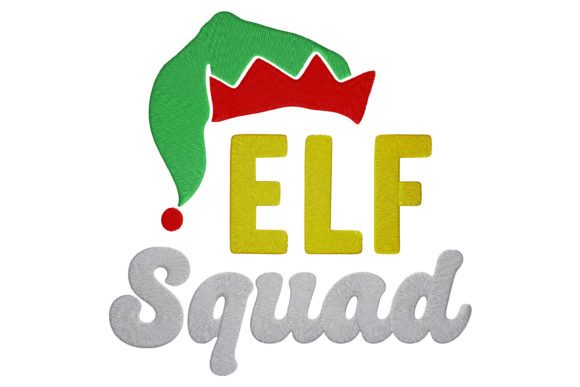
Elf Squad Embroidery Design: Real-World Project Review
The Smile That Stitches Before You Even Test It
I’ve seen plenty of holiday-themed embroidery files, but the Elf Squad design lands with a certain mischievous charm. As soon as I previewed it in my software, the mood was immediate: playful, a little nostalgic, and unfailingly friendly. The layout groups a few elf-inspired faces or figures—just enough personality without crowding the hoop, and the expressions read clearly even at a reduced size. For a designer who’s spent years testing what works on a finished product, that instant readability is worth more than a dozen overly complex compositions. The spacing feels intentional, the ear and hat shapes hold their own even in a dense fill stitch, and the visual energy practically whispers “this will actually sell.”
What I appreciate most is that Elf Squad doesn’t try to be everything. It’s not a sprawling scene that falls apart on a tote bag or a tiny logo that vanishes on a sweatshirt. It’s a focused, character-forward motif that tells a small story in stitch form. When I imagine it running on a soft sage green hoodie or a rich cream apron, I can already see the customer’s reaction—immediate recognition, a little grin, and that tactile urge to touch the embroidery. That’s the connection every handmade product maker is chasing.
When You’re Stitching With a Sales Rack in Mind
Last week I cut a swatch of midweight French terry, the kind I use for custom sweatshirts heading to a local holiday market. I needed something that could anchor a Christmas collection without shouting. The Elf Squad design sat beautifully on the fabric grain. Because the shapes are built with clear outlines—likely a mix of satin stitch borders and solid fill sections—the thread lays down cleanly, and the dimensional look holds even with a medium cutaway stabilizer. No puckering around the narrow ear tips, no distortion in the curved hat brims. That’s a sign of thoughtful embroidery file digitizing.
On a structured garment like a zip hoodie or a denim jacket, this design would feel right at home. But I also draped a lightweight jersey knit in the hoop just to push it. As expected, a little extra TLC was needed—topping film, a softer backing, and slightly reduced tension on the top thread to avoid tunneling. The takeaway? This is a design that thrives best on stable, medium-to-heavyweight fabrics. It will reward you handsomely on a pillow cover, a canvas tote bag, or a sturdy apron. On ultra-thin or highly elastic surfaces, you’ll need to be the one babying the machine, not the other way around.
A Tote Bag That Almost Sold Itself
During a sample run, I stitched Elf Squad onto a natural cotton tote with a black thread set, and the contrast was sharp enough to stop a fellow maker mid-sentence. Something about the elf eyes and the segmented beanie stripes really pops on an unbleached, slightly nubby fabric. I watched her pick it up, turn it toward the window light, and ask, “Is this a custom digitizing job?” That’s when you know the design asset has the kind of boutique appeal that buyers perceive as high-value.
For Etsy sellers or craft fair vendors, this is precisely the kind of machine embroidery design that elevates a basic product. A simple tea towel with Elf Squad in one corner immediately becomes a seasonal gift. Add a hoop-framed version for nursery decor, and you’ve got a baby shower item that doesn’t feel mass-produced. The theme is broadly Christmas, but the elves themselves feel character-driven rather than explicitly religious or overwrought, so they slip into multiple listing categories without alienating anyone.
Where Stitch Density Meets Customer Trust
I’ve learned that buyers don’t just see a design—they feel it. When the thread coverage is patchy or the density is too high, you get stiff patches that wash awkwardly and crack along the highlights. With Elf Squad, the test stitch on a sweatshirt showed an even fill throughout the main bodies, and the satin border held a crisp edge without bunching. I’d still recommend a light test run on a scrap identical to your final fabric, because every machine reads embroidery files a bit differently.
Pay close attention to the cheek lines and the small accent shapes—maybe tiny bell details or pointed ears. In my stitch-out, the smallest satin segments needed a slight adjustment on my machine’s speed, but they came out clean. If I were launching a full line of Elf Squad patches, I’d personally run a dozen units and check for thread breaks at those delicate corners. Treat those as the trust-building checkpoints that separate a professional product from a disappointing one.
Designer Notes Before You Go Live
There’s a quiet checklist I go through before putting any Embroidery design into client-facing production, and Elf Squad was no different. First, contrast matters deeply here. The expression details—especially the eyes and the hat folds—can get lost on dark fabric if you choose a thread color that’s too low in value. I tested a charcoal fleece with a deep crimson thread, and while it worked, the elf’s gaze felt a little flat. Switching to a brighter accent or adding a thin white highlight could bring it back to life. Always test both dark and light backgrounds.
Second, mind your hoop size. The design is advertised as suitable for everyday products—pillows, t-shirts, sweatshirts—so the dimensions likely fit within standard 4x4 or 5x7 hoops, but I never assume. Get the exact width and height from the seller before you commit. You don’t want to find out on a deadline morning that the design barely fits a cap frame or exceeds your max embroidery area. For baby clothes or infant items, scaling down manually carries risk. If the file isn’t optimized for a 3-inch run, those tiny stitch angles can turn into a mess.
Thread Colors, Texture, and the Handmade Financials
When you’re pricing a finished product, the perceived worth often hinges on how dimensional and clean the embroidery appears. The Elf Squad motif, with its layered hat stripes and distinct facial features, invites multi-color thread changes. That’s an opportunity to show off your artistry, but it’s also a time cost. On a single-needle machine, each color stop adds minutes. For a craft business averaging small-batch production, I’d limit the palette to three or four well-chosen shades—perhaps an olive green, a warm cream, and a true red—and watch the design still hold its character beautifully.
For a commercial run on a multi-needle, this is a breeze. But for the home embroiderer working a solo machine, the labor is part of the love. I’d suggest batching: hoop several blanks, run the first color on all of them, then switch threads. This turns a potentially slow project into a smooth, rhythmic workflow that doesn’t eat your margin.
Where I’d Use Elf Squad—and Where I’d Think Twice
My honest, practical list of winning applications includes: sweatshirt left-chest placements, centered tote bag backs, apron bibs, kitchen towel corners, pillow sham fronts, and the pocket area of a denim jacket. For a curated boutique drop, I could see this on a lined canvas lunch bag or a Christmas stocking cuff. The design’s personality feels equally at home on a child’s tee as on an adult’s cozy pullover. Because the elves have a slightly quirky, almost vintage vibe, they easily cross between funny-gift territory and genuinely sweet keepsake territory.
I’d be more cautious about using Elf Squad on heavily textured fabrics like thick corduroy or waffle weave, where the fine line details could sink unevenly into the surface. Caps with a steep front curve demand careful hooping, and if the design includes tiny raised elements, the curvature might distort their width. Beanies and stretch ribbed knits require a water-soluble topping and a very steady hand. It’s not that these applications are impossible—they just demand a higher skill level and some sacrificial samples before you commit your good blanks.
Licensing, Listings, and the Little Business Details
Because this is a digital embroidery file, the question of commercial use always comes up fast. Many sellers bundle designs with personal-use-only licenses unless otherwise stated. Before you stitch Elf Squad onto thirty sets of handmade Christmas gift bags for your shop, double-check the licensing terms. Some designers allow small-batch commercial use with credit, others require an extended license. This is not the time to guess. And if you’re selling the finished product on Etsy, include a clear photo of the stitched sample, not just a digital mockup that could misrepresent stitch density. Buyers appreciate realism, and it protects your reviews.
For those creating matching product mockups or design previews for listings, the file’s crisp shapes convert nicely into flat-lay photography. When I photographed my test piece, the lighting caught the stitch sheen in a way that looked intentional and premium—no surprise since the satin border naturally plays with light. That little boost in visual appeal can make an Etsy listing go from “meh” to “must buy” in seconds.
When the Hoop Comes Off: The Final Feel of a Finished Piece
After the thread snips, the topping removal, and a quick press, I held the finished sweatshirt up and ran my thumb over the embroidery. The back side was soft with no irritating stiff knots, the front had a pleasing low-relief texture, and the colors held their vibrancy without bleeding. I tossed it in a delicate wash cycle once, and the design didn’t warp. That kind of real-life resilience is what convinces me a design can become a repeat-production asset rather than a one-time experiment.
Elf Squad does its job not by being overly clever, but by being emotionally clear and stitcher-friendly. It fits the Christmas category without screaming, lends itself to both playful and heartfelt handmade products, and gives you enough latitude to interpret it across fabrics and color palettes. For a designer who’s seen hundreds of holiday motifs that look great on screen but fall apart under the needle, this one earns its place in my working library—and likely in my next craft fair lineup.