Great Germany Flag: Embroidery Review for Craft Fairs
I have spent countless weekends setting up craft fair booths, studying what catches a shopper's eye from three tables away. When I unzip a new machine embroidery design file and hoist the first test stitch, I immediately judge it by the same question my customers ask without words: Would I put this in my home or wear it outside? The Great Germany Flag design lands with a bold answer. It is not a whisper; it is a declaration. That straightforward tricolor identity gives it instant recognition, and in a busy market aisle, recognition is half the sale.
First Impression: Bold National Pride with a Clean Finish
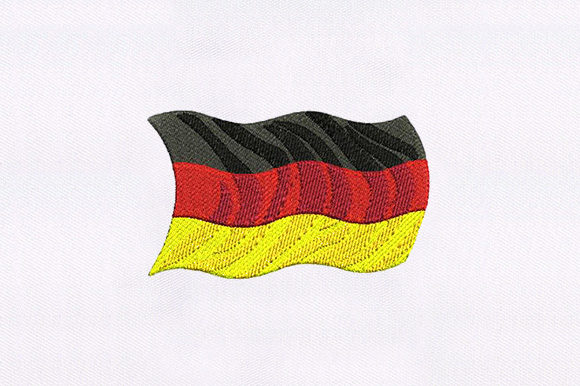
At first glance, this embroidery file reads as unapologetically festive. It carries the weight of a national symbol without unnecessary frills, which works strongly for handmade product booths. The flag’s three equal horizontal bands of black, red, and gold create a graphic punch that stands out on neutral fabric. This is not a cutesy, farmhouse, or rustic interpretation; it feels more like a modern, clean, and premium statement piece. For a craft fair product, that is a massive advantage because it translates easily onto items for both German ex-pat celebrations, sports events, Oktoberfest-themed gatherings, and even everyday urban street style.
The design personality lands somewhere between decorative pride and sleek minimalism. If your booth mixes embroidered tea towels, aprons, and caps, the Great Germany Flag acts as an anchor piece that grounds the whole display. The absence of intricate swirls or tiny text means customers process it instantly, which is exactly what you need when they only pause for three seconds before moving on to the next table.
How the Great Germany Flag Performs on Best-Selling Craft Fair Items
Over the years I have learned that a single digital embroidery file can make or break an entire product line. The versatility of a national flag design determines how many SKUs you can confidently bring. Here is where this design shines and where it needs a little careful planning.
Tote Bags and Market Bags
A canvas tote with the Great Germany Flag centered squarely becomes a walking billboard of pride. The rectangular proportions of the flag map perfectly onto the front panel of a standard blank tote. I would position the design slightly above the lower third, avoiding the drop zone where the bag folds. The bold color blocks photograph beautifully for online listings, which is essential if you are an Etsy seller. I recommend stitching this onto heavy cotton or cotton-linen blends. A 100% polyester smooth bag can work too, but the flat surface makes any stitch density irregularities more visible under direct light.
Aprons and Kitchen Textiles
For apron embroidery, the flag becomes a statement bib piece. On a full-length bib apron in dark denim or natural canvas, the black-red-gold combination pops dramatically. For tea towel embroidery, I prefer to shrink the design slightly and place it in the lower corner, maybe paired with a small coordinating motif like a pretzel or hop leaf if licensing permits. Because the design is saturated color blocks, a textured or waffle-weave towel can cause thread puckering, so test on that fabric texture before committing to a dozen units.
Caps and Curved Surfaces
Embroidery on a baseball cap is always a gamble with stripes. The curved surface distorts straight lines, and the narrow vertical space between the crown and brim can force you to scale the design down. At smaller sizes, the three bands lose their crisp separation and risk blending into a dark blur, especially if you are stitching on a dark fabric. I would reserve cap application for structured five-panel caps with a large front area, and I would digitize a slightly modified version if the original file struggles with the curve. The Great Germany Flag works better as a broad, flat statement than a tiny accent.
Patches and Small Accents
Turning this design into an embroidered patch requires disciplined size choices. A patch smaller than two inches risks losing the clean division between the black and red bands. I have seen many flag patches turn into a muddy rectangle because the stitch directions fought the fine edges. If you plan to sell patches, stick to a minimum width of 2.5 inches, use a firm cutaway stabilizer, and consider a thicker border stitch to lock the shape. Patches sell fast at streetwear pop-ups and German festival side stands, so the profit margin justifies the extra effort.
Pillow Covers and Home Decor
A 16x16 inch linen pillow cover with the Great Germany Flag centered becomes a low-effort, high-margin product for handmade home décor shoppers. The design feels modern and gender-neutral, fitting seamlessly into a living room that mixes world-culture accents. I would stitch it on a removable pillow cover blank and recommend customers machine-wash cold inside out. For small shop product photos, I style it on a neutral sofa with a throw blanket, and it consistently stops scroll on social media.
Production Realities: Stitch Density, Fabric, and Size Warnings
Large swaths of solid fill stitch always give me pause, and a flag is exactly that. The black band on top may be the densest area, and if the stitch density is too high, you get stiff patches, bobbin thread pulling to the top, and fabric warping. Here is what I check before I even think about loading up the hoop for batch production.
- Test on scrap fabric first. Never trust a new embroidery file on a $4 blank. Run it on a cotton square that matches the weight of your product.
- Verify hoop size compatibility. The design description does not list a specific size, so measure the actual stitch area after unzipping the file. You need at least an inch of clearance inside the hoop for the tack stitches.
- Check for dense stitch areas. Solid-color blocks can exceed 4,000 stitches per section. If your machine struggles, consider slightly reducing density in the software before stitching.
- Mind small lettering or hidden details. If the design includes any tiny text near the flag, confirm it stays legible below 3 inches wide.
- Dark fabric demands contrast testing. The black band can vanish on charcoal or navy blanks. Light beige, cream, stone, white, or even a bright yellow canvas are safer backgrounds.
- Thick fabrics like denim or textured towels will compress the design. Use a sharp needle and a soft backing to keep the flag’s edges crisp.
For commercial embroidery, batch stitching flags requires consistent thread tension. I always stitch three samples in a row before I trust the file, because slight feed variations can misalign the color transitions. The thread colors need to be true to the flag: a deep, almost traffic-light black, a fiery signal red, and a warm sunflower gold. Cheaping out on thread turns the gold muddy or the red orange, and suddenly the design feels off-brand.
Visual Merchandising and Customer Attention at the Booth
When I set up my table, I think in terms of vertical and horizontal eye movement. A row of folded tea towels sewn with the Great Germany Flag creates a rhythmic stripe of color that draws people closer. I hang a finished tote bag at eye level on a hook stand and pair it with a simple sign that says “Proudly Stitched.” Shoppers who have German heritage, travel memories, or upcoming festival plans stop immediately. This design acts like a beacon.
Buyer engagement deepens because the flag is conversational. People tell stories about a trip to Berlin, a grandmother in Hamburg, or a soccer final party. That emotional connection raises perceived product value. A plain tea towel sells for $12; the same towel with a well-stitched flag sells for $18–20. The perceived handmade quality goes up because the design looks intentional, not like a clip-art afterthought.
However, consistency matters. If one towel shows a slight puckering around the red band and the next lies flat, customers notice. It diminishes brand consistency. I dedicate one machine to this design for the whole day, pre-threaded with the exact black, red, and gold, and I never swap color sequences mid-batch. That discipline keeps the entire product line uniform.
Etsy, Social Media, and Digital Sales Potential
Many Etsy seller friends use flag designs as part of a larger digital bundle. While I focus on physical finished product, I also know that a clear, eye-catching mockup sells the digital embroidery file itself. A printable mockup of the design on a crisp white tote bag, shot in even natural light, can triple listing views. Photographing the stitched item from slightly above, capturing the texture of the threads, gives buyers confidence that this is not a thin, splotchy file. If you sell the file on an embroidery marketplace, include a close-up of the satin-stitch edges to show quality.
Licensing, however, is the final gate. The file formats included—10O, ART, CND, DSB, DST, DSZ, EXP, HUS, JEF, PCS, PEC, PES, TAP, VIP, VP3, XXX—cover almost every machine brand, so compatibility is generous. Before you stitch this onto products for resale, confirm that the designer grants commercial embroidery permission. Flag designs sometimes carry institutional restrictions, especially if the file includes a coat of arms or official elements. I always read the license document fully and, when in doubt, message the digitizer. Selling finished items without proper rights puts your small business at risk.
Designer’s Pre-Production Checklist for the Great Germany Flag
I keep a laminated card next to my machine with the following steps for any new design assets. Run through this list before you stitch one piece you intend to sell.
- Inspect the stitch order and spacing in your embroidery software. Look for unnecessary trims or jumps that could slow production.
- Test the design on the exact fabric you will sell. Cotton, canvas, denim, and towel each absorb tension differently.
- Use the correct stabilizer. Cutaway for knits and high-density fills; tear-away for stable wovens only if the design is not too heavy.
- Check thread contrast. Wind black, red, and gold bobbins for a clean back, or stick with white if your tension is dialed in.
- Create at least one real product mockup. Hang the finished tote or lay the tea towel flat and photograph it under booth-like lighting.
- Confirm the final stitched size fits your most-used hoop. For me, a 5x7 inch flag works across tote bags, towels, and pillow covers; a 4x4 often feels cramped.
- Review density adjustments. If the design feels bulletproof thick, use your software to scale density by 10% lighter to keep the fabric drape soft.
- Label your finished products with care instructions. A small tag that says “Delicate wash, cool iron on reverse” protects your reputation.
The Great Germany Flag embroidery file is not a set-it-and-forget-it design, but with the right prep, it becomes a reliable workhorse for any Independence Day-themed or year-round German heritage inventory. The design’s simplicity is its greatest asset: it photographs beautifully, reads instantly, and stirs the kind of customer emotion that converts a browser into a buyer. For craft fair product sellers who want a bold, sellable, and culturally resonant design, this flag deserves a center spot in your embroidery library.
Final Thoughts for the Craft Fair Table
When I imagine my booth the night before a big market, I think about balance. Too many loud designs overwhelm; too many subtle pieces get lost. The Great Germany Flag sits confidently in the middle—vivid enough to attract from a distance, refined enough to fit modern handmade aesthetics. Stitch it on a structured tote, a neat apron, or a soft pillow cover, pair it with a few natural wood display props, and watch how many hands reach out to touch the threads. That tactile moment, the customer feeling the smooth satin stitches and smiling, is the truest test of whether a design works. This one passes with flying colors.