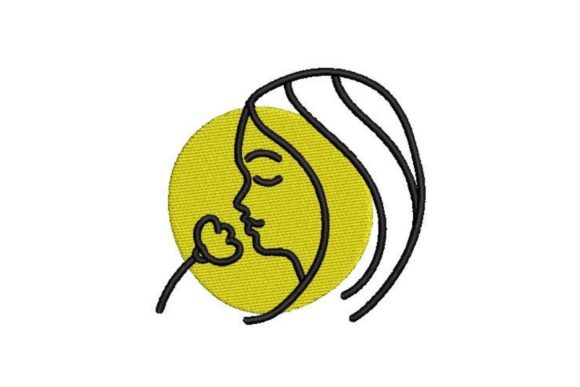
Woman Smelling a Flower: A Designer’s Business Review
When a small business owner asks me to pick a machine embroidery design for their branded merchandise, the first thing I do is strip away the personal taste layer and look at the file through a commercial lens. That’s exactly what I did with the Woman Smelling a Flower design. On the surface, the title and the brief description point toward cheerful home decoration — but as an embroidery designer, I needed to see if this artwork holds up when stitched onto an apron, a cap, or a custom patch that represents a real brand.
First Impressions of the Artwork
The moment I pulled up the preview of Woman Smelling a Flower, I got a sense of gentle, hand-drawn charm. The composition feels personal and expressive, almost like a sketch from a botanical journal. The subject — a figure pausing to enjoy a bloom — carries an emotional warmth that’s hard to ignore. This isn’t a loud, in-your-face graphic. It whispers calm, creativity, and appreciation for small moments.
Visual Personality and Style
Based on the title alone, the design likely leans feminine, delicate, and romantic. It would sit comfortably in a Floral category, and that influences how a brand might use it. A modern coffee shop could pick it up for a soft sleeve detail. A handmade soap label could carry it as a tiny embroidered badge. A florist might love it on a branded tote. The mood is cheerful but not childish; elegant but not stiff. That balance is exactly what many small brands look for when they want their custom apparel to feel approachable and human.
Branded Patch Potential for Small Businesses
Patches are the unsung heroes of small business merch. They’re low-commitment, high-impact, and easy to sew onto everything from denim jackets to canvas pouches. But not every digital embroidery file translates well into an embroidered patch. What I look for is clear outlines, distinct subject separation, and a shape that holds together when scaled down.
Woman Smelling a Flower has two things going for it right away. First, the silhouette — a person leaning toward a bloom — is instantly readable even without fine details. Second, the emotional story means customers don’t just see a flower; they see a moment. That connection is marketing gold. I can easily picture a boutique bakery using this as a circular patch on each pastry box ribbon, or a small pottery studio sliding one onto a canvas apron pocket.
That said, the detail inside the flower and the face profile will demand careful stitch density adjustments. If the embroidery file is packed with tiny petals or facial features, reducing it to a 2‑inch patch could turn those areas into a blurry knot. I would strongly recommend running a test stitch at the exact patch size before promising any client a finished tray of a hundred pieces.
Ideal Products for Woman Smelling a Flower
- Apron embroidery — chest-level placement on a bib apron for bakeries, cafés, and flower studios
- Cap embroidery — small side hit or back arch accent; the curved surface means you need a light file with good pull compensation
- Tote bag design — centered on a natural cotton tote, it would feel like a premium giveaway at a launch party
- Embroidered patch — iron‑on or sew‑on for beanies, jacket sleeves, and brand merchandise kits
- Linen shirt accents — a left‑chest mark for a boutique team uniform, adding a subtle branded touch
- Product packaging accents — small stitched tag sewn onto soap wraps, candle bags, or linen pouches
For any of these uses, the key is to match the thread palette to the brand’s own colors. A soft mauve and sage green might suit a flower shop, while a café could go with warm ochre and cream. The design’s open feeling invites that kind of customization without losing its identity.
Practical Embroidery Designer Notes
Before I ever load the machine, I run through a mental checklist. With Woman Smelling a Flower, several practical questions jump out — and they’re the same ones every small business owner should ask before treating this as a production‑ready machine embroidery design.
Testing and Preparation Checklist
- Check the supplied formats and hoop size. The description doesn’t list specific file types or hoop dimensions, so you need to confirm that the embroidery file will fit your machine and your smallest usable hoop before anything else.
- Test in black and white first. Stitch the design with a single dark thread on scrap fabric. This reveals whether the outlines and fill areas remain clear when color is stripped away. A design that depends entirely on pastel thread colors might lose all definition on a dark apron.
- Evaluate small‑scale stitchout. I’d run it at 50% of the default size to see if the face and flower still read. If the eyes or petals collapse, it won’t work for a cap front or a tiny hang tag.
- Review thread count and contrast. A delicate Floral design can turn into a dense, stiff patch if the designer over‑digitized the fills. Ask for a sewout photo from the supplier, or trust only your own test. Look for gentle layering that allows the fabric to breathe.
- Choose the right stabilizer. On a lightweight tote, a tear‑away might be enough. On a stretchy uniform polo, you’ll need cut‑away stabilizer to prevent distortion. On a cap, a heavy‑fluid adhesive backing and careful hooping are non‑negotiable.
- Create a printable mockup for client approval. Even if I’m using it for my own brand, I place the digitized preview onto a photo of the actual cap or tote. It saves so much heartache and shows exactly where the design will sit, how large the text (if any) appears, and how the colors play off the fabric texture.
- Confirm commercial licensing. The description mentions home use and a cheerful touch for your house, but for business merchandise you need explicit commercial rights. Always verify that your digital embroidery file allows for items sold, gifted, or used in a promotional setting.
The Impact on Brand Identity
Small businesses thrive on emotional connection. Adding Woman Smelling a Flower to a staff uniform or a giveaway item does more than just decorate — it telegraphs the brand’s personality. A handmade candle label with this stitched patch immediately feels more handmade product than mass‑produced. A coffee shop apron with this detail tells customers the place values mindfulness, beauty, and quiet moments.
From a recognition angle, if you use this design consistently on your tote bag design, your packaging, and your team’s work shirts, people start associating the silhouette with your name. That builds trust faster than a generic logo. The design is distinctive enough to act as a secondary brand mark — something customers remember even when they can’t recall the shop name right away. For an Etsy seller, this could be the signature stitch that makes every order feel like a tiny gift.
However, alignment matters. If your brand is gritty, industrial, or ultra‑modern, a romantic floral sketch might confuse your audience. But for creative studios, organically‑minded brands, children’s goods, tea shops, floral design businesses, pet portrait artists (who want a soft human touch on their merchandise), and any venture that leans warm and natural — this design can elevate the entire brand identity.
Final Take for Commercial Use
As a production‑focused embroidery designer, I view Woman Smelling a Flower as a strong contender for niche branding projects. It isn’t a generic star or a bold sport emblem; it’s quiet art. That means it suits small runs, specialty items, and businesses that sell a feeling along with their product. The design’s success will live or die by your technical prep. Test ruthlessly, check the stitch density, confirm the hoop size, secure commercial rights, and build a mockup that sells the vision before you ever thread a needle.
If you treat this machine embroidery design with the care it deserves, it can become the soft‑touch asset that sets your small business merch apart from the sea of plain aprons and blank caps. That’s what a well‑chosen Floral embroidery file can do — it’s not just thread, it’s a tiny ambassador for everything you want your brand to be.