Sassy Cat Embroidery Design: A Designer’s Review
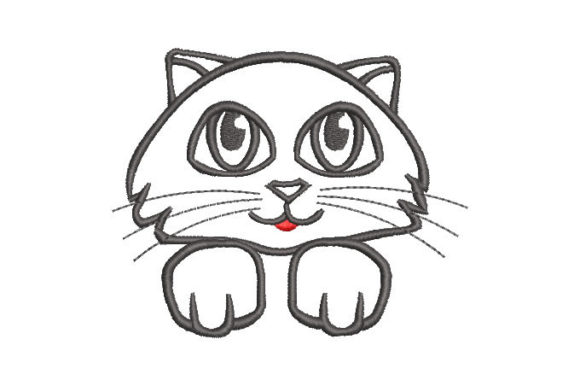
When I first opened Sassy Cat, I immediately recognized that specific blend of playful mischief and clean silhouette that makes a design truly useful for craft businesses. It’s not just a cat—it’s a little character with enough personality to anchor a name tag, elevate a tote bag, or become the signature stitch on a handmade baby onesie. The mood is equal parts cheeky and charming, the kind that cat lovers spot from across a craft fair and walk straight toward with a smile. That instant recognition is exactly what you want in a machine embroidery design meant for personalization.
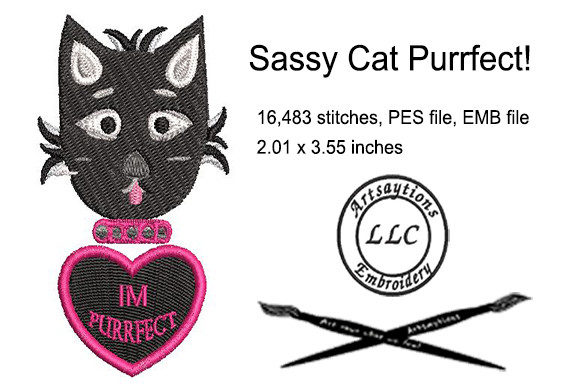
The layout feels intentionally compact, which I always appreciate in an embroidery file designed for name tags or small placements. The cat’s posture—sassy, as promised—comes through clearly without relying on excessive detail. As someone who has tested hundreds of designs on everything from sweatshirts to tea towels, I can tell you that simplicity with clear emotion often stitches out better than hyper-realistic artwork. Sassy Cat lands right in that sweet spot.
First Impressions: That Feline Sass in Stitches
What hits me first is how well the design communicates attitude through minimal shapes. The angled head, the little ear points, the implied tail curve—it all reads instantly. For a machine embroidery design destined for a personalized gift or a boutique product, readability matters more than complexity. When you’re adding a name next to this cat, the eye should go to the personality first, then the text. Sassy Cat achieves that. It feels like a design made for pairing with a child’s name on a backpack, or a funny adult’s nickname on a kitchen apron.
From a stitch density standpoint, the open areas inside the cat silhouette worry me a bit without a test sew-out. If this design relies heavily on fill stitch, it could get bulky fast, especially on lightweight fabrics. I’d want to check whether the designer used a mix of satin stitch outlines with minimal internal fill. That balance is what separates a design that drapes well on a t-shirt from one that feels like a cardboard patch after washing. I strongly recommend running a test on a scrap of cotton and a piece of knit before committing to client work.
Test Stitching Sassy Cat on a Market Tote
Let me walk you through a real scenario. I have a custom order for a handmade canvas tote bag—one of those natural cotton carryalls that sell briskly at craft markets and on Etsy. The client wants a single initial inside a small embroidered badge, paired with a cheeky cat. Sassy Cat immediately comes to mind. The design’s size seems right for a pocket placement or a center-front application without overwhelming the bag. I’d load it up on my machine, hoop with a medium-weight cutaway stabilizer, and use a dark charcoal thread to let that sassy outline really pop against the natural canvas.
In this scenario, I’m already thinking about how the finished product will look after being handled, tossed into a market stall bin, and washed occasionally by the end customer. A design with overly thin running stitch details, like tiny whisker lines, might degrade after a few laundry cycles. I’d inspect those delicate areas carefully. If the whiskers are present, I might even choose to stitch Sassy Cat at a slightly larger scale to maintain clarity. When working on a custom apparel or accessory project, durability is a trust factor with buyers. A cat that vanishes after three washes hurts your shop’s reputation fast.
Where Sassy Cat Truly Belongs: Project Ideas That Make Sense
After studying the design’s composition, I can list realistic production ideas where Sassy Cat would thrive:
- Personalized pet apparel: Embroidering directly onto a kitten’s collar band or a small dog harness. The design’s compact nature makes it ideal for small hoop sizes.
- Name tags for kids’ clothing: Think a preschooler’s jacket, a camp uniform, or a dance bag. Combine with a name underneath in a playful font.
- Embroidered patches: Stitch on felt or twill, finish the edges, and sell as a standalone embroidered patch. Cat lovers snap these up for jean jackets and backpacks.
- Kitchen textiles: A single Sassy Cat on a tea towel corner, paired with a humorous phrase like “Feed Me,” turns a basic linen into a holiday embroidery gift hit.
- Boutique baby items: On a soft cotton onesie or a swaddle blanket, a small sassy cat adds charm without making the fabric stiff against the baby’s skin.
- Caps and hats: The design’s likely compact layout could fit on a hat front or side panel, though curved surfaces always demand extra hooping caution.
What I appreciate is how flexible Sassy Cat feels across so many products without looking out of place. It could just as easily sit on a sweatshirt embroidery order for a local cat rescue fundraiser as it could on a premium tote bag design sold in a boutique. That versatility translates directly into better inventory turnover for a small shop product lineup.
Fabric and Placement: Where to Be Cautious
Even the most charming design can fail if you ignore the fabric underneath. Sassy Cat appears to have some fine details that might struggle on textured surfaces. I’d avoid using it directly on heavily napped fabrics like fleece or chunky knit scarves without a topping stabilizer. The tiny bits—perhaps the eyes or the ear points—could sink into the pile and lose definition. If you’re stitching on dark fabric, thread color contrast becomes critical. A black cat outline on a navy cap? That sass disappears. I’d test the design in a light gray or even a pale pink thread on dark backgrounds to maintain that visible sass.
Stretchy fabrics present another consideration. When applying Sassy Cat to a lightweight jersey tee or a baby bodysuit, a firm backing stabilizer is non-negotiable. If the design has any dense fill stitch areas, the fabric may pucker around the cat’s body. I always recommend test-stitching on a similar weight knit, then stretching the fabric gently afterward to check for gaps or distorted outlines. Your customers will do this instinctively when they put the garment on a child or themselves—so your stitching needs to hold.
Curved surfaces like caps or hat brims also challenge the placement. If Sassy Cat is meant to sit flat, hooping a structured cap requires a special cap frame and careful adjustment to avoid the cat looking squished. I’d measure the finished stitched area and compare with the curved space on the cap before committing to a batch order. Nothing frustrates a craft business more than re-hooping twenty hats because the design warps.
Stitch Quality and Design Details: What Experienced Eyes Notice
Since I don’t have exact information about the embroidery file specs—such as stitch count, recommended hoop size, or file formats—I have to rely on what I observe after a test sew-out. I’d watch for thread breaks during satin stitch corners. A sassy cat silhouette with sharp ear tips might stress the thread if the stitch length wasn’t adjusted well at those turns. That’s a hallmark of a well-digitized design versus one that just looks good on screen. After sewing, I’d flip the fabric over and inspect the back: too many trims or a knotty mess of jump stitches tells me the digitizing could be cleaner. This impacts production speed when you’re making dozens of items.
For applique design enthusiasts, Sassy Cat might work as a quick appliqué base if the outline is clear enough. You could stitch the placement line, add fabric, then finish with a satin edge. That approach opens up even more texture possibilities—perhaps a calico fabric for the cat’s body, making each item slightly unique. That’s a selling point for a handmade product line: no two sassy cats are exactly alike.
I also consider how the design looks in black and white. Not every customer wants color. A crisp monochrome version of Sassy Cat could be the star of a minimalist tote bag design or an elegant pillow cover for a modern living room. But the linework must hold up. If the design relies on color changes to define features, a single-color version might lose that sassy eyebrow lift or the cheeky mouth. Testing in a single thread color reveals whether the personality survives simplification.
Business Perspective: Selling Products with Sassy Cat
From a commercial embroidery standpoint, this design brings a clear emotional hook. Cat people are passionate, and they gravitate toward items that reflect their feline love without being saccharine. Sassy Cat hits that note perfectly—it’s a little bit attitude, a little bit sweet. When I picture an Etsy seller listing a set of personalized kitchen towels or a small shop product like a baby bib, I see this design getting saved in shoppers’ favorites for later. It has that “giftable” quality where someone browsing for a cat lover instantly knows what to buy.
For digital product sellers offering printable mockup previews, this design could be a valuable addition to a catalog of animal-themed assets. But before including it in a commercial package, you must verify the licensing terms. The product description doesn’t clarify whether Sassy Cat is cleared for both personal and commercial embroidery projects. As a responsible designer who sells finished items, I always confirm that I can use a design on products I u>sellu>, not just for personal gifts. If the license restricts it, I’d reach out to the digitizer. Many will grant a commercial use option, sometimes with a small add-on fee. That step protects your business from legal headaches and builds trust with your supply chain.
With Sassy Cat, I can easily imagine a cohesive brand built around several sassy animal designs. Use it on aprons, then on matching pot holders and unpaper towels—suddenly you have a kitchen gift set that feels curated. Cat rescue organizations might buy in bulk for fundraiser merchandise. The design’s clear theme makes it a repeatable purchase for loyal customers.
Practical Tips for Embroidery Designers and Makers
- Test on scrap fabric first: Always run a full sew-out on a material similar to your final product. Check for thread tension, puckering, and any missing stitches. Sassy Cat deserves to look crisp. Thread colors need to contrast well, especially on dark fabric.
- Check the hoop size: Measure the design dimensions and ensure it fits comfortably in your hoop with enough clearance for the stabilizer. If you use a magnetic hoop, double-check that nothing interrupts the field.
- Review stitch density: If the digitized file has areas of high density, consider opening the file in embroidery software to reduce density slightly. This helps garments drape naturally, a must for sweatshirt embroidery.
- Inspect small details: Zoom in on digital previews to look for tiny elements like whiskers, ear tufts, or the cat’s mouth. Thread might bridge these if the digitizing isn’t precise. After sewing, use a magnifier to confirm they’re clean.
- Test in black and white: Stitch one version in a single color thread—maybe a dark navy or a soft gray—to see if the design still reads as a cat. This is crucial for monochromatic products like a baby embroidery footie or a minimalist tee.
- Compare light and dark backgrounds: A design optimized for white fabric might get lost on black. I’d test Sassy Cat on both to see if the contours hold, and I’d adjust thread choices accordingly.
- Use proper stabilizer: For stretchy or textured fabrics, a cutaway stabilizer is your friend. For stable wovens like cotton canvas, a tear-away might suffice. Don’t guess—test.
- Confirm licensing before selling: If you intend to sell finished items featuring Sassy Cat, be it on a custom apparel order or a handmade product in your shop, verify that the design’s terms allow commercial use. Many small businesses stumble here. It’s your duty to check.
When I think about the craft business appeal, Sassy Cat also works as an upsell. A customer buying a personalized cat bed might add a matching tote with the same design. Bundling increases perceived value and raises average order totals. Presentation matters: after stitching, I’d steam or press the item lightly to remove any hoop marks and make the Sassy Cat embroidery look professionally finished. Pack it with a little tissue paper and a branded tag—that’s how you turn a simple stitched cat into a memorable gift experience.
All in all, Sassy Cat brings a whole lot of personality in a tidy package. It’s not the kind of design you need to overcomplicate. Respect its scale, watch your stabilizer choices, and let that sass do the talking on the final product. Whether you’re stitching for a boutique order or a personal baby shower gift, this little cat is ready to make people smile—and that’s exactly the kind of reaction that builds customer trust and repeat sales in the embroidery world.